

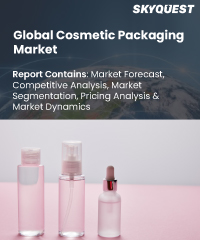
Cosmetic Packaging Market
Report ID: SQMIG30L2113
Skyquest Technology's expert advisors have carried out comprehensive research and identified these companies as industry leaders in the Cosmetic Packaging Market. This Analysis is based on comprehensive primary and secondary research on the corporate strategies, financial and operational performance, product portfolio, market share and brand analysis of all the leading Cosmetic Packaging industry players.


The cosmetic packaging market continued to be driven by the premiumisation of beauty products, with consumers continuing to prefer more high-quality, aesthetically pleasing packaging that reflects the same level of quality in the product's formulation. Consumer demand for alternate forms of shopping has increased dramatically with e-commerce growth and subscription-based service models creating a need for lightweight, unique shipping solutions for beauty products. These products provide a unique way of looking through and seeing all the product's components before experiencing the end-user unboxing experience.
According to SkyQuest Technology “Cosmetic Packaging Market By Material Type (Plastic, Metal, Glass, Paper, and Others), By Packaging Type (Tubes, Bottles, Dispensers, and Other), By Cosmetic Type (Hair Care, Skin Care, Nail Care, and Make-Up), By Region - Industry Forecast 2026-2033,” Global Cosmetic Packaging Market is projected to grow at a CAGR of over 4.13% by 2033, on account of urgent need for automating quantified data. Sustainability has become a primary market goal from a niche focus, with new laws in many countries (EU) enacting strict regulations for design and development of sustainable packaging. The EU has enacted a new regulation called Packaging and Packaging Waste Regulation (PPWR) that will force companies to develop and produce products that comply with circular economy principles. The rise of mono materials, refillable packaging, Post-Consumer Recycled (PCR) plastic, and other sustainable practices will continue to shape the future of the industry.
|
Company |
Est. Year |
Headquarters |
Revenue |
Key Services |
|
Amcor (incl. Berry) |
1860 |
Zurich, Switzerland |
USD 21.0 Billion |
Global leader in flexibles, rigid plastics, and sustainable "circular" packaging. |
|
Silgan Holdings |
1987 |
Stamford, CT, USA |
USD 5.9 Billion |
Dispensing systems, closures, and specialty beauty triggers/sprayers. |
|
AptarGroup |
1992 |
Crystal Lake, IL, USA |
USD 3.6 Billion |
High-precision dispensing, airless systems, and pharma-grade beauty solutions. |
|
Albéa Group |
2004** |
Gennevilliers, France |
USD 1.6 Billion |
World leader in tubes, mascara brushes, and lipstick mechanisms. |
|
HCP Packaging |
1960 |
Shanghai, China |
USD 1.2 Billion |
Primary packaging for color cosmetics; specialists in compacts and palettes. |
|
Gerresheimer AG |
1864 |
Düsseldorf, Germany |
USD 1.1 Billion |
High-end molded glass bottles and luxury skincare jars. |
|
DS Smith |
1940 |
London, UK |
USD 950 Million |
Sustainable fiber-based secondary packaging and e-commerce "frustration-free" boxes. |
|
Quadpack |
2003 |
Barcelona, Spain |
USD 240 Million |
Sustainable wood packaging, airless tech, and "rapid prototyping" for indie brands. |
|
Libo Cosmetics |
1980 |
Dongguan, China |
USD 210 Million |
Eco-friendly aluminum and PCR plastic components for mass-market makeup. |
|
Graham Packaging |
1970 |
Lancaster, PA, USA |
USD 180 Million (Cosmetics) |
Custom blow-molded plastic bottles for hair care and body wash. |
Amcor is now recognized as a major player in the packaging industry after its landmark merger in 2025 with Berry Global. Amcor's R&D network has become one of the largest worldwide and enables it to develop recyclable mono-materials and high-performance flexible films. As part of this strategy, Amcor focuses its cosmetics solutions on "postal-ready" packaging for e-commerce and replacing high-end traditional mixed plastics with responsibly sourced and easily recyclable polymers, while maintaining a luxurious feel to meet the demands of beauty brands.
Silgan has emerged as the industry leader for brands that require complex dispensing solutions for cosmetic products. Silgan has the largest market share for dispensing pumps for fragrance and lotion products, as well as for specialty closure designs. By 2026, Silgan's focus will be on developing new generation, "metal-free" dispensing pumps, which will enable consumers to place their entire bottle including the non-metal component into a single recycling bin and solve a significant historical challenge within cosmetic waste management.
AptarGroup has been described as the technologically advanced member of the group, bridging the divide between precision pharmaceutical applications and aesthetics of beauty products. AptarGroup is the industry leader in airless dispensing systems to keep "clean beauty" formulations, which do not contain preservatives, from oxidizing. AptarGroup is also at the forefront of the Smart Packaging Movement and is utilizing the use of technology to incorporate digital tracking into premium dispensing systems to verify product authenticity.
Albéa is the world's largest producer of mascara brushes and cosmetic tubes and is the foundation of the the color cosmetics category. Their 2026 product portfolio will focus on the concept of "responsible beauty" which is highlighted by their EcoFusion Top (a single part tube/cap) and 3-D printed mascara brushes. The company operates a specialized "Beauty Lab" in Italy that serves as an innovation centre for global applicator development.
HCP is the leading provider of high-end colour cosmetics; they are well-known for compacts, lipsticks, and palettes. HCP has mastered the use of premium finishes including vacuum metallization and intricate surface decoration. Their current growth is being driven by their refillable “keepsake” compacts which allow consumers to replace just the inner pan (product) without discarding the whole compact, thus dramatically reducing the amount of plastic waste.
While many manufacturers are focusing on plastic packaging, Gerresheimer is considered the gold standard of premium glass packaging on a global scale. They provide some of the world’s most recognizable houses that manufacture fragrance and skincare products with their iconic thick bottomed glass jars and bottles. In 2026, Gerresheimer will lead the change towards creating "post-consumer recycled (PCR) glass" and using lightweighting processes to reduce the carbon footprint associated with heavy glass containers, while at the same time retaining the prestige image traditionally associated with glass packaging.
DS Smith focuses on secondary packaging and e-commerce. As beauty companies abandon plastic mailers, DS Smith's offerings include 100% recyclable fiber-based, plastic-free alternatives.
Quadpack Located in Barcelona, Quadpack has built a niche for sustainable wood packaging and is one of few companies that has a B-Corp rating that is among the highest. Their wood packaging, such as caps and other components, is FSC-certified, allowing brands to present a natural/organic look. They have recently started to develop their Woodacity collection, which consists of all-wood opening systems without the use of plastic liners and screw threads.
Libo produces many high-speed production aluminium and eco-friendly containers for makeup products. For example, they produce a large amount of lipstick cases and lip gloss applicators. Their strategy for the future is based on the '5Rs' (reduce, recycle, replace, refill, & responsibility) and they have achieved significant market growth through the establishment of a line of containers made from 100% PCR plastic for mass-marketed brands.
Graham Packaging is the leader in large-scale blow-molded containers. They have become the primary supplier of blow-molded containers to many global hair care and body wash brands. They are experts in HDPE and PET plastic bottles that are 100% recyclable.
The cosmetic packaging market is entering an era where both functionality and environmental stewardship play an important role in the direction of this industry. While traditional packaging such as plastics are still dominating the market share due to their flexibility and lower prices, new and innovative products made from natural fibers and biodegradable materials are paving the way for the future. Digital connectivity and eco-conscious product designs no longer provide brands competitive advantages; they have become baseline requirements for brand survival in today’s marketplace. In the end, companies that will be winning in this marketplace will find balance between the luxury aesthetic of "no-compromise" with transparent and verifiable means of sustainability that appeals to a growing global consumer base that is highly informed and very aware of the changing landscape.
REQUEST FOR SAMPLE
 REQUEST FREE CUSTOMIZATION
Global Cosmetic Packaging Market size was valued at USD 56.71 Billion in 2024 poised to grow from USD 59.05 Billion in 2025 to USD 81.63 Billion by 2033, growing at a CAGR of 4.13% in the forecast period (2026–2033).
The global cosmetic packaging market outlook is highly competitive, featuring major international players like Amcor, AptarGroup, Berry Global, and Silgan Holdings. These companies focus on innovation, sustainability, and strategic acquisitions to strengthen market presence. For instance, Amcor invests heavily in recyclable and biodegradable packaging, while AptarGroup emphasizes smart dispensing technologies. Berry Global expands through mergers and eco-friendly material development. Such strategies drive growth and meet rising consumer demand for sustainable, functional packaging. 'Amcor (Australia)', 'AptarGroup (USA)', 'Berry Global (USA)', 'Silgan Holdings (USA)', 'Gerresheimer AG (Germany)', 'ALPLA (Austria)', 'Schott AG (Germany)', 'HCP Packaging (China)', 'SGD Pharma (France)', 'Lumson SpA (Italy)', 'RPC Group (UK)', 'Toyo Seikan Group Holdings (Japan)', 'Rexam PLC (UK)', 'Coverpla (Spain)', 'KPP Group (South Korea)'
Growing environmental awareness drives the cosmetic industry toward sustainable packaging solutions. Consumers prefer eco-friendly materials like biodegradable plastics and recycled paper, pushing brands to innovate and reduce waste. This shift not only meets regulatory requirements but also enhances brand reputation, fueling market growth worldwide.
Rise of Sustainable and Eco-Friendly Packaging: Consumers increasingly demand eco-conscious packaging, driving brands to adopt biodegradable, recyclable, and reusable materials. This shift reduces environmental impact and aligns with global sustainability goals, pushing innovations in green packaging solutions that enhance brand reputation and meet regulatory requirements across the global cosmetic packaging market trends.
What Premium Packaging Trends are Emerging in North America?
Want to customize this report? This report can be personalized according to your needs. Our analysts and industry experts will work directly with you to understand your requirements and provide you with customized data in a short amount of time. We offer $1000 worth of FREE customization at the time of purchase.
Feedback From Our Clients
Report ID: SQMIG30L2113
sales@skyquestt.com
USA +1 351-333-4748
 USA (+1) 351-333-4748