
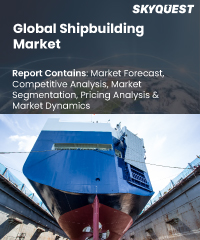
Top Shipbuilding Companies

Skyquest Technology's expert advisors have carried out comprehensive research and identified these companies as industry leaders in the Shipbuilding Market. This Analysis is based on comprehensive primary and secondary research on the corporate strategies, financial and operational performance, product portfolio, market share and brand analysis of all the leading Shipbuilding industry players.

Shipbuilding Market Competitive Landscape

The competitive landscape in the shipbuilding industry is characterized by intense competition, technological advancements, and the ability to deliver vessels on time and within budget. Shipbuilders that can offer competitive pricing, advanced technologies, efficient production processes, and strong project management capabilities are better positioned to thrive in this highly competitive market.

Shipbuilding Market Top Player’s Company Profiles

  • China State Shipbuilding Corporation (China)
  • China Shipbuilding Industry Corporation (China)
  • Samsung Heavy Industries (South Korea)
  • COSCO Shipyard Group (China)
  • Imabari Shipbuilding (Japan)
  • Tsuneishi Shipbuilding (Japan)
  • Jiangnan Shipyard (China)
  • Hudong-Zhonghua Shipbuilding (China)
  • Hyundai Mipo Dockyard (South Korea)
  • Kawasaki Heavy Industries (Japan)
  • China Merchants Industry Holdings (China)
  • Hanjin Heavy Industries (South Korea)
  • Fincantieri S.p.A. (Italy)
  • Meyer Werft (Germany)
  • STX Offshore & Shipbuilding (South Korea)
  • Mitsui E&S Holdings (Japan)
  • Shanghai Waigaoqiao Shipbuilding (China)
  • Oshima Shipbuilding (Japan)
  • Hyundai Samho Heavy Industries (South Korea)

REQUEST FOR SAMPLE

Want to customize this report? REQUEST FREE CUSTOMIZATION

FAQs

Shipbuilding Market size was valued at USD 123.43 Billion in 2024 and is poised to grow from USD 128.86 Billion in 2025 to USD 181.85 Billion by 2033, growing at a CAGR of 4.4% during the forecast period (2026–2033).

The competitive landscape in the shipbuilding industry is characterized by intense competition, technological advancements, and the ability to deliver vessels on time and within budget. Shipbuilders that can offer competitive pricing, advanced technologies, efficient production processes, and strong project management capabilities are better positioned to thrive in this highly competitive market. 'Hyundai Heavy Industries (South Korea)', 'China State Shipbuilding Corporation (China) ', 'Fincantieri S.p.A. (Italy) ', 'Samsung Heavy Industries (South Korea) ', 'Hanwha Ocean (South Korea) ', 'Imabari Shipbuilding (Japan) ', 'JSC United Shipbuilding Corporation (Russia) ', 'Sumitomo Heavy Industries (Japan) ', 'Mitsubishi Heavy Industries (Japan) ', 'Mazagon Dock Limited (India) ', 'Cochin Shipyard Limited (India) ', 'Harland & Wolff (UK) ', 'K Shipbuilding (South Korea) ', 'Austal USA (USA) ', 'Damen Shipyards Group (Netherlands) ', 'Naval Group (France) ', 'Thyssenkrupp Marine Systems (Germany) ', 'Seatrium Ltd. (Singapore) ', 'CSBC Corporation, Taiwan (Taiwan) ', 'Zamil Offshore Services Company (Saudi Arabia)'

The global fleet of ships continually ages, requiring replacement and modernization. Ships have a lifespan, and older vessels become less efficient and costlier to maintain. Shipowners and operators often opt to invest in new ships that offer improved fuel efficiency, advanced technologies, and compliance with updated environmental regulations. The need to replace aging vessels drives the demand for new ship construction.

Défense and Naval Shipbuilding Programs: Military modernization programs and the replacement of aging naval fleets contribute to the shipbuilding market. Nations invest in naval vessels, submarines, aircraft carriers, and other Défense ships to strengthen their maritime capabilities and ensure national security. Naval shipbuilding contracts play a significant role in supporting the shipbuilding industry, particularly in countries with robust Défense budgets.

The region that contributes the most money to the worldwide shipbuilding industry is Asia-Pacific, and it is projected that it will expand at a CAGR of 4.93% over the next few years. A total of 12 of India's main ports handle over 61% of the country's total cargo volume, while the country has about 28 shipyards scattered throughout many states. Additionally, over 60% of the navy budget is devoted to capital expenditures, and over 70% of the capital budget for the military has been spent on domestic purchases over the past five years. According to data from China's Ministry of Industry and Information Technology (MIIT), China accounts for a sizable chunk of the global market in terms of delivery orders and order books, with corresponding shares of 43.1%, 48.8%, and 44.7%.

Request Free Customization

Want to customize this report? This report can be personalized according to your needs. Our analysts and industry experts will work directly with you to understand your requirements and provide you with customized data in a short amount of time. We offer $1000 worth of FREE customization at the time of purchase.

logo-images

Feedback From Our Clients

Global Shipbuilding Market
Shipbuilding Market

Report ID: SQMIG20G2019

sales@skyquestt.com
USA +1 351-333-4748

BUY NOW GET FREE SAMPLE